
Dogs · Mac and Windows
Meet the Labrador Retriever.
The Labrador Retriever is a strongly built, very active gundog with a short, dense coat and a famously kind, eager-to-please nature. It is the most popular of all pedigree breeds in the UK and works as a family companion, guide dog, service dog and gundog.
Launch price $9.99, was $29.99
Look
Labrador Retriever
01
At a glance
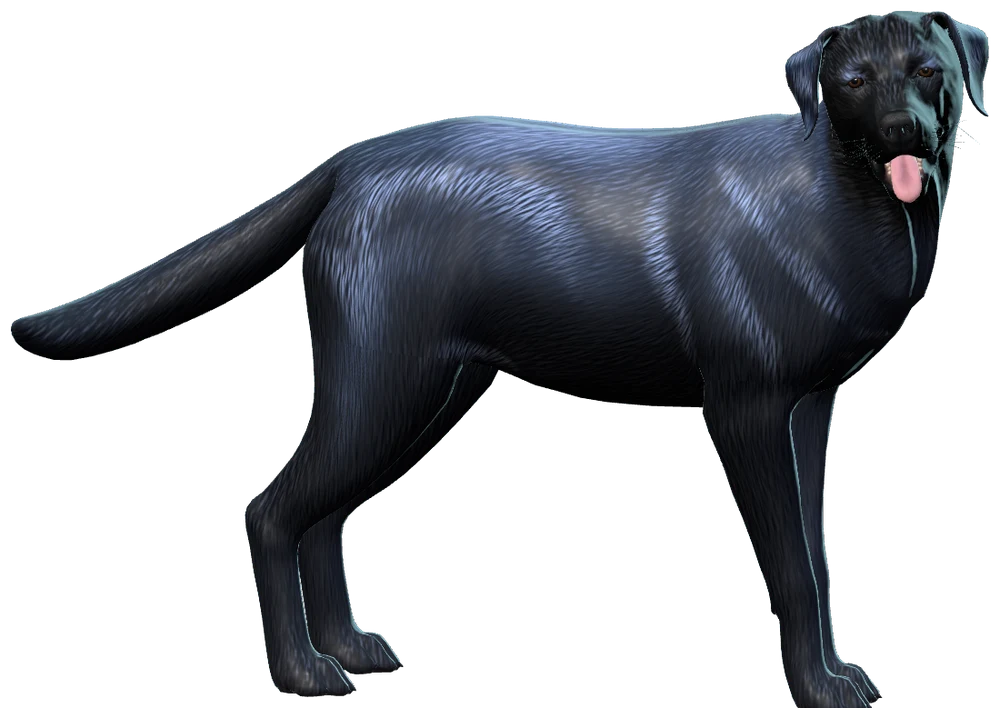
A large, sturdy retriever with a broad head, a thick otter tail and a short, weather-resistant coat in black, yellow or liver/chocolate. Labradors stand around 55 to 62 cm and usually live about 10 to 13 years. They are devoted, affectionate and quick to learn, love water and retrieving, and need plenty of exercise every day. Sillmates makes the Labrador Retriever as a desktop pet companion for Mac and Windows, in a Black coat.
02
History and origin
Despite the name, the breed comes from Newfoundland, not Labrador. European fishermen probably brought their dogs to the island, and these mixed into a type known as the St. John's Dog, after the island's capital. The dogs helped fishermen retrieve nets and lost lines and pull carts loaded with fish, and even dived for cod that had slipped off the hook. Dogs taken to England had their retrieving skills recognised by the sporting gentry, and the Earl of Malmesbury, an early patron, gave the breed its name. By 1870 the name Labrador Retriever was common in England. The Kennel Club recognised the breed in 1903 and the AKC in 1917, and the first breed club was founded in 1916.
03
Temperament and personality
The Royal Kennel Club breed standard describes the Labrador as intelligent, keen and biddable, with a strong will to please, and a kindly nature with no trace of aggression or undue shyness. The PDSA calls Labradors devoted, affectionate and loving, obedient, quick to learn and eager to please. VCA Hospitals adds that they are outgoing toward strangers, get along well with other pets and dogs, and love to retrieve, to the point of seeming compulsive. They are quick to learn but tend to pull on the lead, and do best with reward-based training involving food or retrieving.
04
Size and build
The breed standard asks for a dog that is strongly built, short coupled and very active, broad in skull and broad and deep through chest and ribs. The Royal Kennel Club's ideal height at the withers is 56 to 57 cm for dogs and 55 to 56 cm for bitches, and the PDSA gives an average height of 55 to 57 cm and an average weight of 25 to 35 kg. The American Kennel Club gives 22.5 to 24.5 inches for males and 21.5 to 23.5 inches for females, with males at 65 to 80 pounds and females at 55 to 70 pounds. Field-bred Labs are lighter built and more active than show-bred Labs.
05
Coat and colours
The coat is a distinctive feature of the breed: short and dense without wave or feathering, with a fairly hard feel to the touch and a weather-resistant undercoat. The tail is very thick at the base and tapers towards the tip, clothed all round in thick, short coat to give the rounded otter tail. The only correct colours are wholly black, yellow and liver/chocolate, and yellows range from light cream to fox red. The eyes are brown or hazel.
06
Exercise and play
Full of energy, Labradors need a lot of exercise and mental enrichment each day, and The Royal Kennel Club puts it at more than two hours. The PDSA suggests a mix of walking, running, retrieving, playing, sniffing and searching, and swimming, tailored to each dog. A Labrador can be a calm housedog if given adequate exercise, and it also needs mental exercise in the form of training or games. Dogs from working lines will need training to fulfil their desire to work and retrieve, and field-bred Labs usually need more exercise than show-bred ones.
07
Grooming and care
Grooming is very simple: a weekly brush is usually enough to keep the coat in tip-top condition, with more brushing during the shedding seasons. Shedding is average to above average. Labradors have a tendency to become obese, so adults should be fed a balanced diet that keeps them lean. VCA Hospitals advises feeding puppies a large-breed growth food, which slows their growing rate but not their final size.
08
Health and lifespan
Lifespan figures differ between sources: the American Kennel Club gives 11 to 13 years, VCA Hospitals 10 to 12 years, and the PDSA and The Royal Kennel Club say over 10 years. Conditions the PDSA lists for Labradors include hip dysplasia and elbow dysplasia, both of which eventually lead to arthritis, a tendency to obesity, and progressive retinal atrophy, a gradual deterioration of the retina. The Royal Kennel Club recommends hip, elbow and eye testing for breeders, and DNA tests including one for exercise-induced collapse. Choose a puppy whose parents have been screened, and keep your Labrador lean.
09
Living with one
Labradors make perfect family pets given the right socialisation, and usually bond well with the whole family. VCA Hospitals describes the Lab as a playful and trustworthy child's companion that gets along well with other pets. The Royal Kennel Club suggests a large house with a large garden, in town or country. Because Labradors are prone to obesity, keep treats in check, and give working-line dogs the training and retrieving they need.
10
Fun facts
In 1938 a Lab became the first dog to appear on the cover of Life magazine, and in 1959 it was the first dog featured on a U.S. stamp. Labradors gradually replaced other breeds as the most popular guide dogs. The Earl of Malmesbury wrote that their coat turns the water off like oil.
11
Questions about the Labrador Retriever
Are Labradors good family dogs?
Yes, given the right socialisation. They usually bond well with the whole family and are known as playful, trustworthy companions for children.
How much exercise does a Labrador need?
A lot. The Royal Kennel Club says more than two hours a day, mixing walks, retrieving, play, sniffing games and swimming, plus training for the mind.
How long do Labradors live?
Sources differ: the American Kennel Club gives 11 to 13 years and VCA Hospitals 10 to 12 years. The PDSA and The Royal Kennel Club say over 10 years.
What colours do Labradors come in?
Only wholly black, yellow and liver/chocolate are correct under the UK breed standard. Yellows range from light cream to fox red.
Why is it called a Labrador if it comes from Newfoundland?
The breed grew from the St. John's Dog of Newfoundland. The Earl of Malmesbury, an early English patron, gave it the Labrador name.
12
Sources
- royalkennelclub.com/search/breeds-a-to-z/breeds/gundog/retriever-labrador
- royalkennelclub.com/breed-standards/gundog/retriever-labrador
- pdsa.org.uk/pet-help-and-advice/looking-after-your-pet/puppies-dogs/large-dogs/labrador-retriever
- vcahospitals.com/know-your-pet/dog-breeds/labrador-retriever
- akc.org/dog-breeds/labrador-retriever
- akc.org/expert-advice/dog-breeds/labrador-retriever-history