
Cats · Mac and Windows
Meet the Sphynx.
The Sphynx is the famous 'hairless' cat, with lemon-shaped eyes, oversized ears and skin that feels like warm suede. Underneath the unusual look is one of the most people-focused cats you can share a home with.
Launch price $9.99, was $29.99
Look
Sphynx
01
At a glance
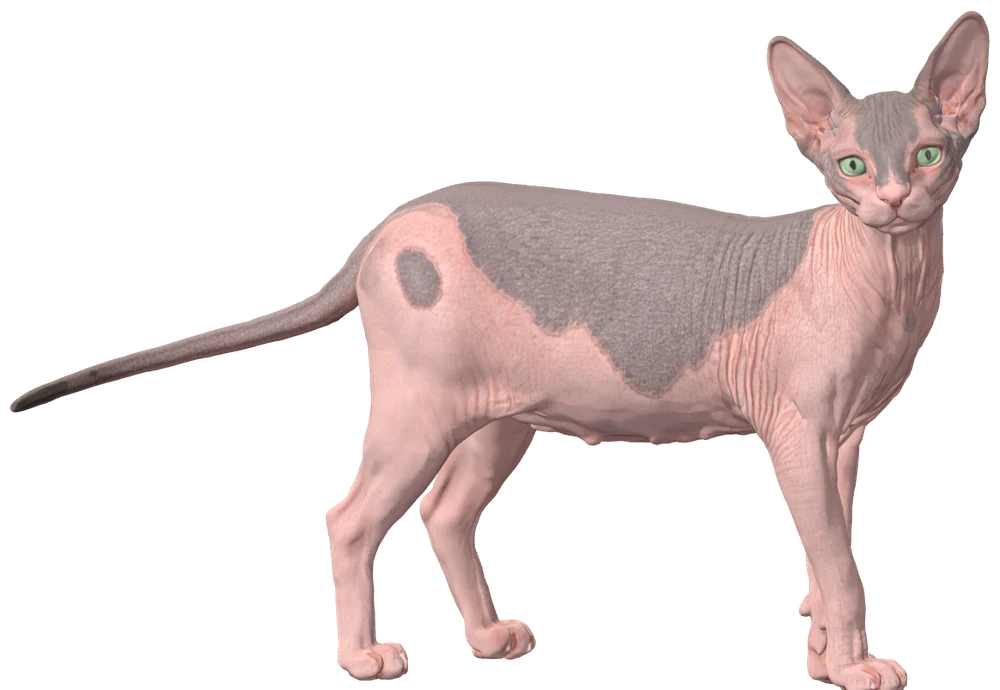
A medium-sized, sturdy cat with little or no coat, big ears and a round belly. Most adults weigh around 3.5 to 4.5 kg, and the Sphynx is chatty, curious and very affectionate. It is an indoor cat that needs regular baths and protection from cold and sun. Sillmates makes the Sphynx as a desktop pet companion for Mac and Windows, in a Pink and Grey coat.
02
History and origin
The breed began with a natural mutation. In 1966 a domestic cat gave birth to a hairless kitten in Toronto, Canada, and the trait turned out to be caused by a recessive gene. Over more than 30 years, breeders worked by outcrossing to normal-coated cats and back to hairless cats, building a diverse gene pool. In 1975 two more hairless cats appeared in Minnesota, whimsically named Epidermis and Dermis, and they joined the breeding programme too. Today's Sphynx descend from these Toronto and Minnesota lines. The Cat Fanciers' Association accepted the Sphynx for registration in 1998 and advanced it to championship status in 2002, and the breed is sometimes called the Canadian Hairless.
03
Temperament and personality
Sphynx are curious, outgoing, very intelligent and anything but shy. The CFA describes them keeping up a stream of steady chatter as they follow you from room to room, usually asking for attention or food. They crave affection and body heat and will spend hours glued to your side, which earned them the nickname 'Love Mooch'. This devotion is wonderful, but it also means a Sphynx does not do well if left alone for long.
04
Size and build
Do not mistake the bare skin for fragility. The Sphynx is a medium-sized, substantial cat with sturdy bones, good muscle and a large, rounded belly, as if it has just finished a nice dinner. Wrinkles on the head give a worried or inquisitive look, and the long, finger-like toes and thick paw pads are part of the charm. VCA gives a weight of 8 to 10 pounds, PetMD gives 6 to 14 pounds, and both PetMD and cats.com put the height at about 8 to 10 inches. Males are usually larger than females.
05
Coat and colours
The Sphynx is not always totally hairless. Its skin is lightly dusted with fine down that is almost impossible to see, and short hair is often present on the nose, ears and tail. Seasonal and hormonal changes can affect this. Because colour and pattern show in the skin itself, Sphynx come in a wide range of shades, from pink to grey, black and patterned.
06
Activity and play
This is an active, playful cat that loves interactive games with its people. Wand toys, puzzle feeders and climbing trees all help, and a Sphynx will happily follow you around the house to see what you are doing. With no coat to keep it warm, it also needs warm places to rest; when sleepy, a Sphynx heads for a warm spot, usually under the covers.
07
Grooming and care
A Sphynx needs more care than its lack of fur suggests. The skin produces natural oils that would normally be spread through a coat, so it needs regular bathing; VCA recommends daily sponging to stop oily spots building up on furniture. Bathing too often can dry the skin, so ask your vet how often to bathe and which shampoo to use. The large ears gather wax and need cleaning. Keep exposure to the sun limited, because the skin can sunburn, and keep your Sphynx indoors or supervised outside. The breed also has a high metabolism and needs to eat more than most coated cats.
08
Health and lifespan
The CFA describes the Sphynx as generally a very robust breed, with some breed-specific issues to be aware of: respiratory problems in kittens because of the lack of hair, hypertrophic cardiomyopathy (a form of heart disease), hereditary myopathy that affects the muscles, sensitive digestion, skin conditions such as urticaria pigmentosa, and periodontal disease. Responsible breeders screen for heart disease. Lifespan figures vary between sources: VCA gives 15 to 20 years, while a vet-reviewed Catster article gives an average of 8 to 14 years. Regular vet check-ups, including heart and dental checks, are the best way to keep your Sphynx well.
09
Living with one
The Sphynx is an indoor cat that suits homes where someone is around a lot. It is popular with children, but the CFA advises that children should be old enough to understand that Sphynx skin is delicate and not suited to rough play. It thrives on the company of other cats, especially other Sphynx, so many owners keep a pair. Sphynx are often thought to be low in allergens, but this is a misconception: allergens come from the skin and saliva, not just fur.
10
Fun facts
The two Minnesota founders were named Epidermis and Dermis. The film cat Mr. Bigglesworth was played by two Sphynx cats, Ted Nude-gent and Mel Gibskin. At cat shows, Sphynx are often carried around in polar-fleece bags to keep them warm. Their skin feels like warm chamois leather or a peach.
11
Questions about the Sphynx
Are Sphynx cats hypoallergenic?
No. It is a common misconception. Allergens are found in skin and saliva, so a Sphynx can still trigger allergies, although regular bathing reduces allergens on the skin.
Do Sphynx cats need baths?
Yes. Their skin is oily and needs regular bathing or sponging, but not so often that it dries out. Ask your vet for a routine and shampoo.
Can a Sphynx cat go outside?
It is best kept indoors or supervised outdoors. Its skin can sunburn and it feels the cold.
How long do Sphynx cats live?
Sources vary. VCA gives 15 to 20 years and a vet-reviewed Catster article gives 8 to 14 years. Good care and regular heart checks matter.
Are Sphynx cats good with children?
They are very popular with children, as long as the children are old enough to be gentle with delicate skin.
12